Using Art in Grief
How Creativity Gives You Room to Breathe
How creativity became part of my grief journey
and five gentle ways to make it part of yours.
Sometimes grief leaves us without words.
We can feel so much, carry so much, and yet struggle to explain what is happening inside us. There are emotions we can’t quite name, thoughts we can’t untangle, and moments when words simply aren’t enough.
I’ve discovered that sometimes, when words aren’t enough, creativity offers another way.
Not to fix grief. Not to make it beautiful. Not to turn our pain into something productive.
But to give ourselves a little room to breathe.
How Creativity Became Part of My Life
During the stay-at-home orders in 2020, I decided to make drawing and art part of my daily life.
I ordered a set of small art journals and some micro pens and started exploring. I followed online tutorials, found inspiration in other people’s artwork, and experimented with whatever caught my attention.
And I had so much fun!
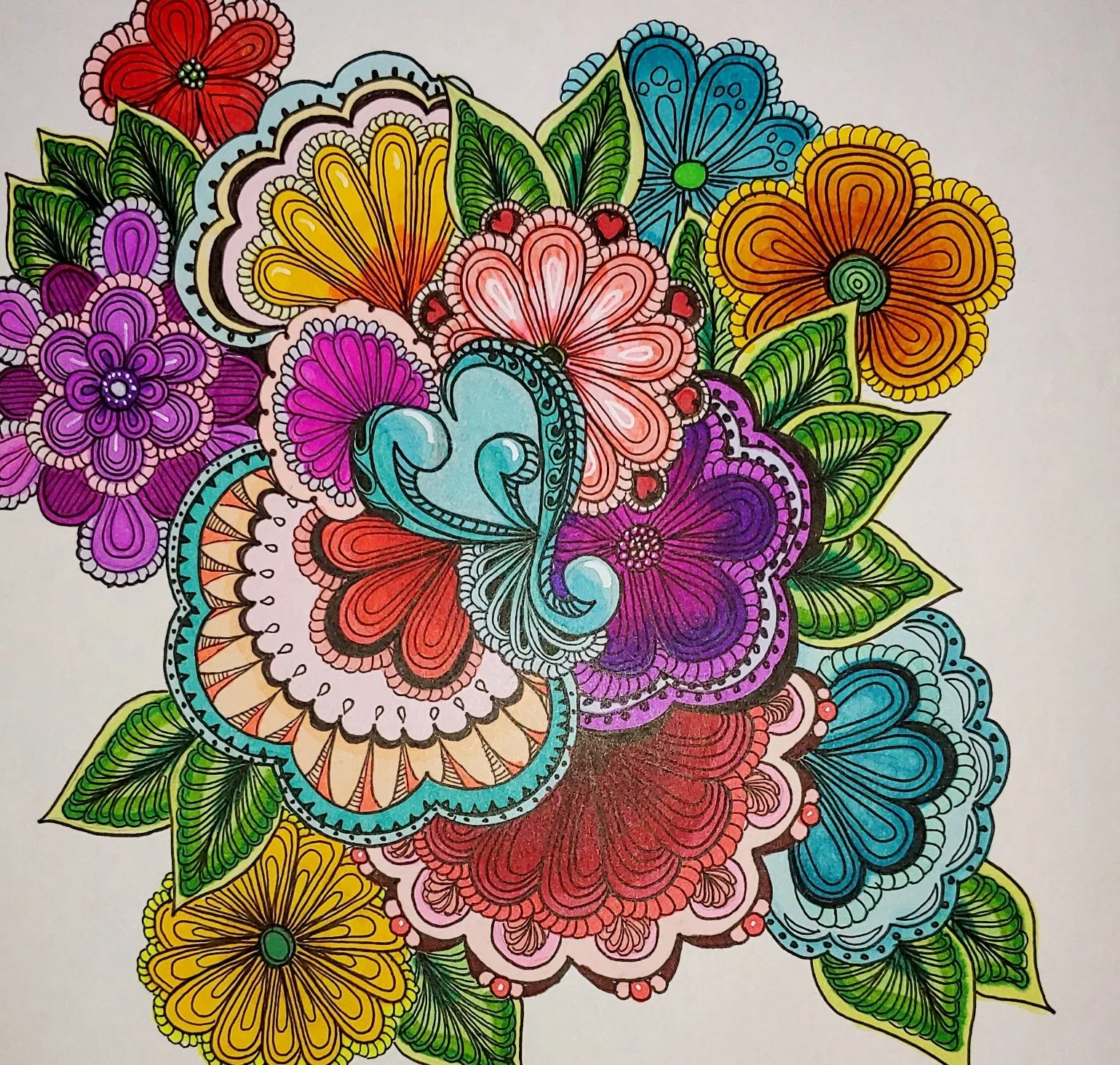
Between April 2020 and November 2021, I explored ink, alcohol markers, watercolor, acrylic paints and markers, charcoal, oil pastels, and lots of digital art.
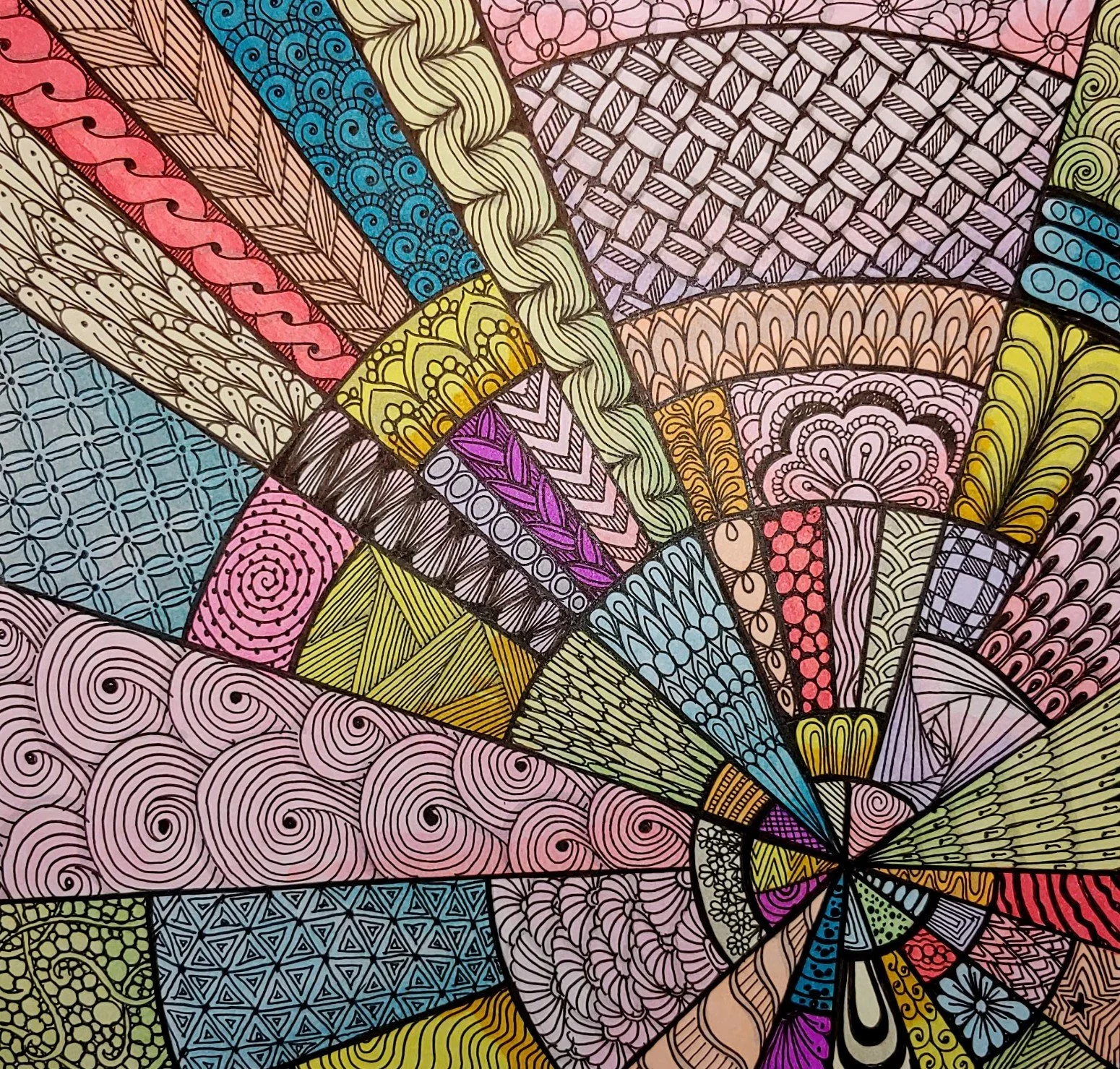
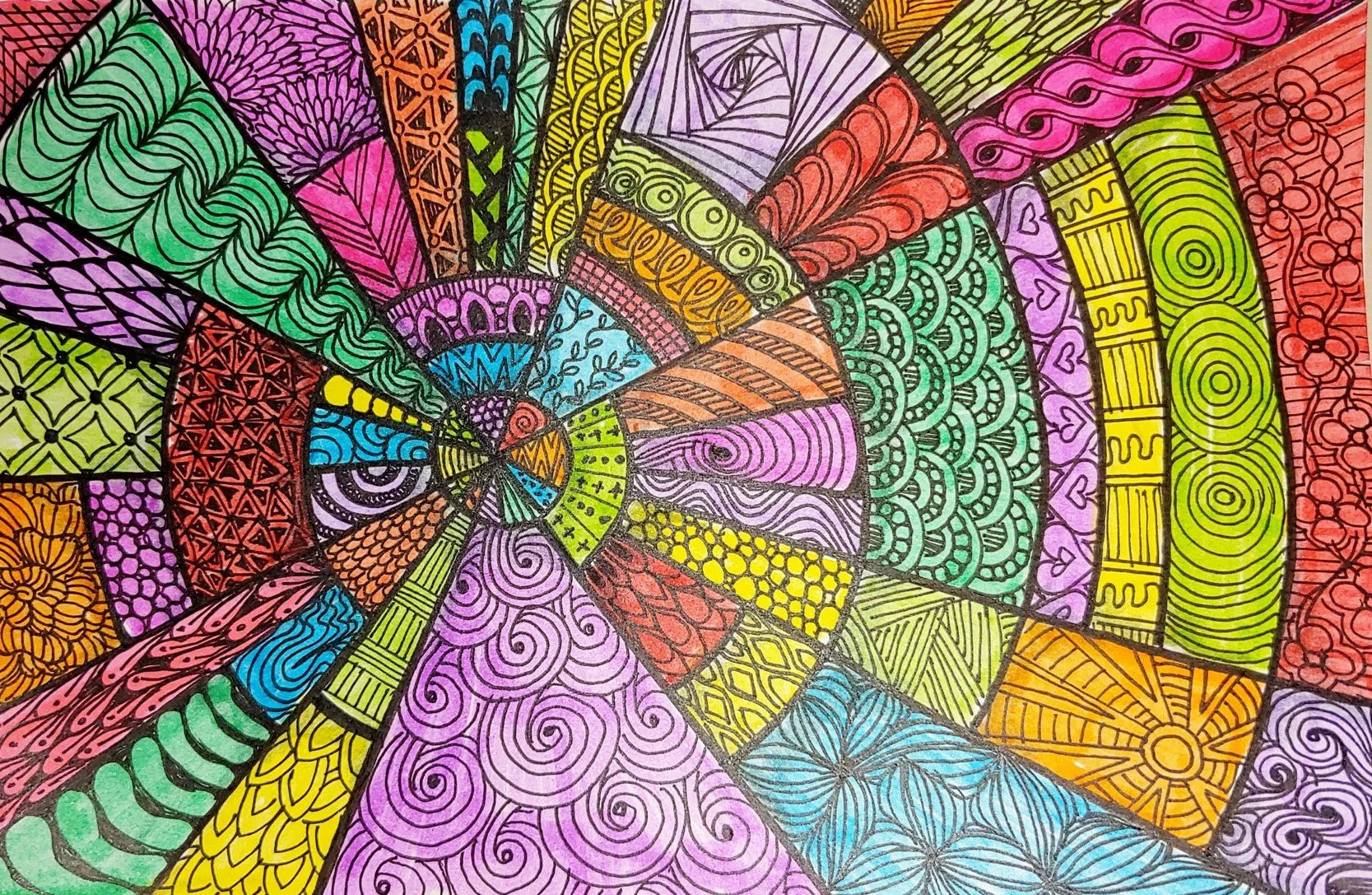
Much of my work during that time was inspired by Zentangle, a method of creating beautiful patterns through simple, structured steps. YOu can see some of my “doodles” from this time here.
I loved the repetition, the patterns, and the freedom to explore without needing to know what the finished piece would look like.
What I didn’t know then was how important those months of creativity would become to my grief journey.

When Grief Changed Everything
When Gary took his last breath, my daily life changed completely.
Obviously.
Permanently.
And strangely, something that had brought me so much joy suddenly became difficult.
Art felt heavy.
I even found myself regretting some of the time I had spent creating while Gary was alive. Time I could have spent with him.
Grief has a way of doing that, doesn’t it? Taking something that once brought us joy and wrapping it in regret or sadness.
But I’ve come to understand that regret was my mind adding suffering to my grief.
Gary loved my art. He loved the finished pieces, and he loved watching me create. He was a musician. He knew what creating could give a person, and he always encouraged me to do what made me happy.
The time I spent creating wasn’t time taken from him. It was something he wanted for me.
For a while, I didn’t have the emotional capacity to create anything original.
But I discovered that I could still follow instructions.
I could take an art class with my daughter. I could follow an online tutorial. I could sit down with a pen and follow the step-by-step patterns of Zentangle.
One line.
Then another.
And another.
I didn’t have to make decisions about the entire piece. I didn’t have to be inspired. I didn’t have to know where I was going.
I only had to focus on the next step.
And somehow, those small steps began giving me moments of calm and peace.
Just enough room to breathe.
Creativity Found Other Ways Into My Grief
About two months after Gary died, I began journaling seriously.
Every night, I wrote to him.
I shared my thoughts, my feelings, my struggles, and the things I was beginning to discover about myself as I learned to live with his absence.
Sometimes I added little patterns and doodles to the pages. Nothing elaborate. Just small creative moments woven into the words.
And eventually, creativity found another outlet.
About a year after Gary died, I bought myself a ukulele and taught myself to play.
Before long, I was writing lyrics about Gary, about missing him, and about my experience of grief.
I even found a local venue that hosted open mic nights and performed regularly for about six months.
People are sometimes surprised that I could stand up in front of strangers and sing about my grief.
But I wasn’t performing for them. I was performing for me. Because that was the purpose, it felt low-risk, and it wasn’t as scary as you might think.
It was my way of saying, out loud and in public: This is my reality. Our love matters. My grief matters. Gary is still loved.
And when performing stopped serving that purpose, I stopped going.
Drawing, journaling, music, songwriting, performing.
Each offered me something different.
Sometimes I needed words. Sometimes I needed music. And sometimes I needed the quiet repetition of pen moving across paper.
I began noticing that when the waves of grief were crashing around me, doodling with intention could help me feel more settled.
My breathing slowed. My attention shifted. My body began to relax.
The grief was still there.
But I could be with it differently.
Why Creativity Can Be So Helpful in Grief
My heart knew what I needed long before I understood the science behind it.
I learned to trust my feelings. I could feel when I needed to calm down, when I needed a reset, and I reached for a pen.
I’m not the only one. A friend of mine discovered calligraphy during her husband’s long illness, through a program at the hospital. She told me that making the same swishes over and over, and breathing with them, helped calm her through the hardest days.
There’s a reason creative expression is incorporated into some hospital, hospice, and bereavement support programs.
Art therapy, music therapy, journaling, and other creative activities can offer ways to explore experiences that are difficult to put into words.
And while working with a trained art therapist can be valuable, we don’t necessarily need formal therapy to experience the personal benefits of everyday creativity.
Creative practices may help us:
Express what words cannot. Sometimes colors, shapes, music, or movement can reflect something we’re feeling before we know how to describe it.
Find moments of calm. Repetitive movements, familiar patterns, and sensory activities can help us feel more grounded when emotions are intense.
Bring our attention into the present. Focusing on a pen, a color, a sound, or the next mark gives our attention somewhere concrete to land.
Explore our inner experience without judgment. Creativity gives us permission to notice what is happening without needing to explain, analyze, or change it.
Stay connected to ourselves and those we love. A journal entry, a song, a painting, or a handmade object can become a meaningful way to remember, reflect, and maintain a connection.
But here’s what I think is especially important:
You don’t have to be an artist to benefit from creativity.
You don’t even have to be good at it.
There is no grade. No right or wrong. No expectation that you produce something beautiful or meaningful.
The value is in the experience of creating, not in the finished product.
Five Gentle Ways to Bring Creativity Into Your Grief Journey
If creativity hasn’t been part of your grief journey, perhaps you’d like to experiment.
You don’t need fancy supplies, special talent, or even much time.
You only need a little curiosity and a willingness to begin.
1. Start Small. Really Small.
When we’re grieving, even simple decisions can feel overwhelming.
So don’t begin with a big project.
Try a small notebook, an index card, or a piece of paper. Draw a circle. Make a few lines. Fill a small space with dots, swirls, or patterns.
Give yourself five minutes.
That’s enough.
One of the things I love about Zentangle is that it invites us to focus on one small step at a time.
And sometimes that’s exactly what grief requires of us, too.
We don’t have to figure out the rest of our lives.
Just the next step.
2. Notice What You Notice
This has become one of my favorite invitations:
Notice what you notice.
Before you begin creating, take a moment to settle into where you are.
Feel your feet on the floor. Notice your breathing. Look at the colors around you.
Then ask yourself:
What feels most present for me right now?
Maybe it’s sadness. Maybe it’s restlessness. Maybe it’s gratitude, anger, tenderness, or something you can’t name.
You don’t need to do anything about it.
Simply notice.
As you create, stay curious.
What colors are you drawn to? Do you want to make bold marks or gentle ones? Does repeating a pattern feel comforting? What happens when you slow down?
You may notice something meaningful.
Or you may not.
Either way, you’ve given yourself a few moments of attention and care.
3. Let Go of the Finished Product
This one can be difficult, especially if you’re someone who likes things to look a certain way.
But creativity in grief isn’t about making something worthy of hanging on a wall.
It’s about the process.
Your lines can be crooked. Your colors can clash. Your journal can be messy. Your song doesn’t have to rhyme.
You can even throw away what you make.
It doesn’t have to be beautiful, meaningful, or finished to have value.
What matters is that you’ve allowed yourself to create without judgment.
And perhaps, in that small act, you’ve practiced giving yourself the same permission with your grief.
4. Explore Different Ways of Creating
Creativity doesn’t have to mean drawing or painting.
Perhaps you love music. Try making a playlist that reflects your grief or reminds you of your person.
Maybe words feel more natural. Write a letter, a poem, or a few sentences in a journal.
You could try photography, gardening, knitting, cooking, collage, dancing, or making something with your hands.
For me, creativity took many forms. Some days it was doodling. Some days it was journaling. Eventually, it was playing my ukulele and writing songs.
Different creative practices met different needs.
Give yourself permission to explore what feels right for you, knowing that what helps today may be different tomorrow.
5. Make Space for Creativity Without Making It Another Obligation
Grief already asks so much of us.
The last thing we need is another thing we feel we’re supposed to do.
So rather than deciding you must create every day, consider making creativity available to yourself.
Keep a small notebook and pen near your favorite chair. Leave a coloring book on the table. Have your journal within reach.
When you notice yourself feeling overwhelmed, restless, or caught in a wave of grief, you might ask:
Would it help to make a few marks?
Maybe the answer is yes.
Maybe it’s no.
Both are okay.
And if you begin, you can stop whenever you want.
Creativity is an invitation, not an assignment.
We Don’t Have to Fix What We Feel
One of the most important things I’ve learned in my grief journey is that my emotions aren’t the problem.
Sadness isn’t a failure.
Missing Gary isn’t something I need to overcome.
And grief isn’t something I have to fix.
Sometimes what I need most is simply a way to be present with what I’m experiencing without becoming completely overwhelmed by it.
For me, creativity has often provided that space.
The movement of my pen. The repetition of a pattern. The sound of my ukulele. The words written to Gary in my journal.
Small moments of presence.
Small moments of connection.
Small moments when I can breathe a little easier.
I don’t create to make my grief disappear.
I create because grief is part of my life, and creativity helps me make room for it.
One line.
One color.
One breath.
One next mark at a time.
Now I’d Love to Hear From You
Has creativity been part of your grief journey?
Perhaps you’ve painted, written, gardened, cooked, played music, taken photographs, made something in memory of your person, or discovered a creative side of yourself you didn’t know existed.
Or perhaps you’ve been curious about trying something but haven’t known where to begin.
I’d love for you to share in the comments or you can email me directly.
What have you created during your grief, and what has the experience of creating offered you?
You never know. Your experience might inspire someone else to pick up a pen, try something new, or find their own small moment of peace.
And if you haven’t explored creativity yet, perhaps today is a good day to begin.
Not because you need to make something beautiful.
But because you deserve a little room to breathe.